Megachurch
Japanese fans show support for their oshi, which can be a favorite idol, musician, athlete, artist, or other person they adore, through a range of activities known as oshikatsu. The word oshi originally comes from the verb osu, meaning “to recommend,” as describing a star or other person or object that fans would like other people to support too. Oshikatsu was on the longlist of Japan’s Words of the Year in 2021, and has established itself as a part of the lexicon since. From Nippon.com’s Guide to Japan
The words “𝘰𝘴𝘩𝘪” and “𝘰𝘴𝘩𝘪-𝘬𝘢𝘵𝘴𝘶” have surfaced repeatedly in our B2C work in recent years, for social media platforms, music streaming, and many other products shaped by questions of interest and belonging. I’ve found myself in multiple discussions about the difference between simply liking someone, being a fan, and declaring them as your 𝘰𝘴𝘩𝘪. In meetings and over drinks, these conversations surface what people are organizing their time, money, and emotional needs around.
Of course, the behaviors and underlying conditions for 𝘰𝘴𝘩𝘪 are not unique to Japan. Fandom and so-called stan culture have been widely discussed in branding and marketing as new approaches to value creation in the so-called attention economy.
But what intrigues me about 𝘰𝘴𝘩𝘪 is that the word itself has entered everyday Japanese vernacular as both noun and verb, applicable beyond the realm of entertainment. It offers a linguistic container that makes a certain kind of attachment publicly legible, even legitimate in some contexts. The attachment becomes easier to inhabit–easier to organize identity around.
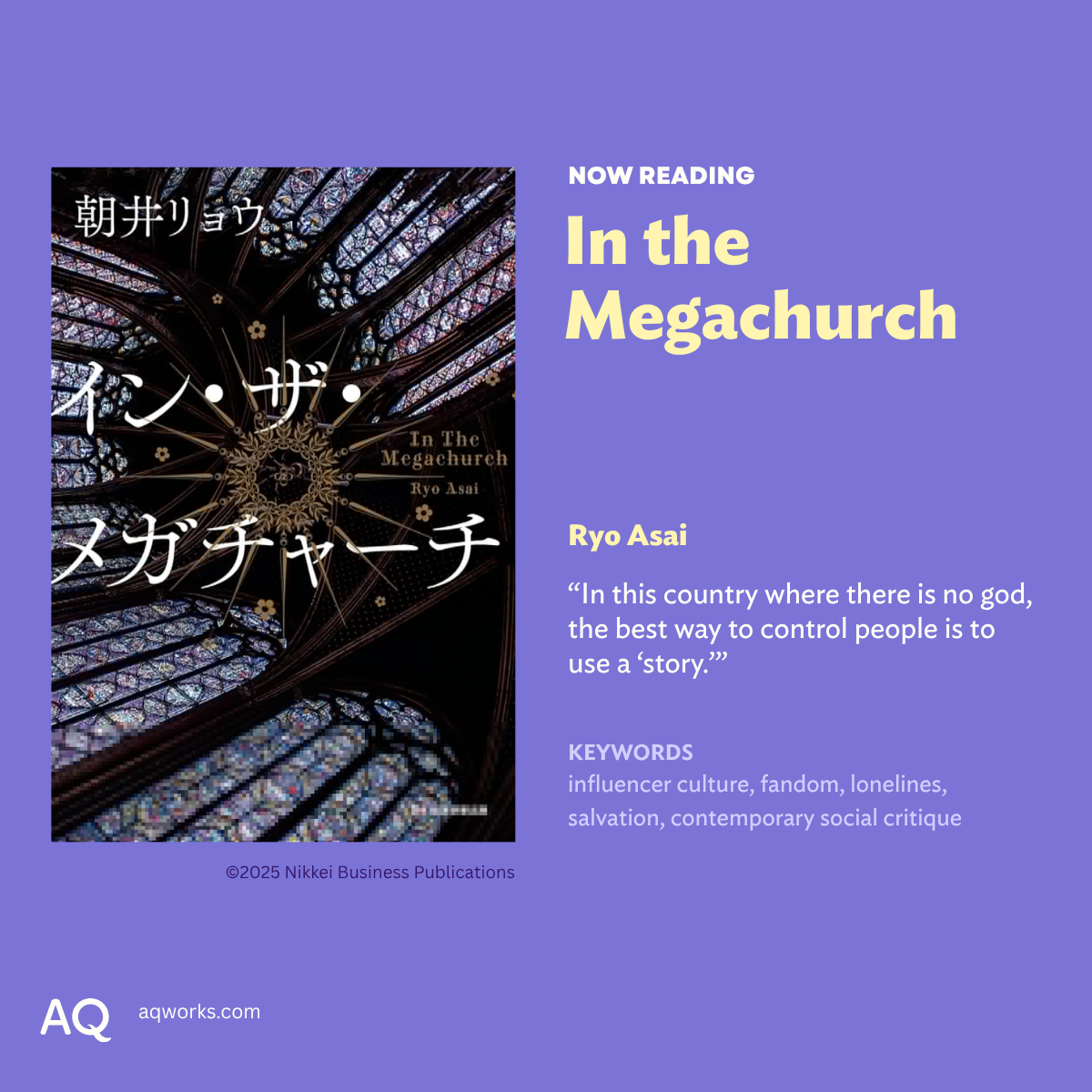
Looking for more texture and a different way to access these topics, I picked up this novel published last September.
It’s an intricate story of three characters whose lives gradually (and then suddenly) collapse into one another: a divorced salaryman desperate for relevance who finds work marketing an idol group; his socially isolated university-aged daughter who is drawn into that fandom without his knowledge; and a financially precarious woman whose world implodes when her favorite idol commits suicide. Each character is searching for a place to stand, and finds it in a structure that both holds and narrows them. Because it’s a novel, we’re made to follow that narrowing all the way through.
Their stories accelerate in leaps larger than I anticipated, their lives deteriorating at a horrifying speed. At the same time, each turn feels like a logical sequence of what happens when one loses their place in a community and reorganizes themselves around a single attachment. The inner lives of these characters feel suffocating, relentless, and entirely recognizable.