Mizuki-san's Happiness Theory
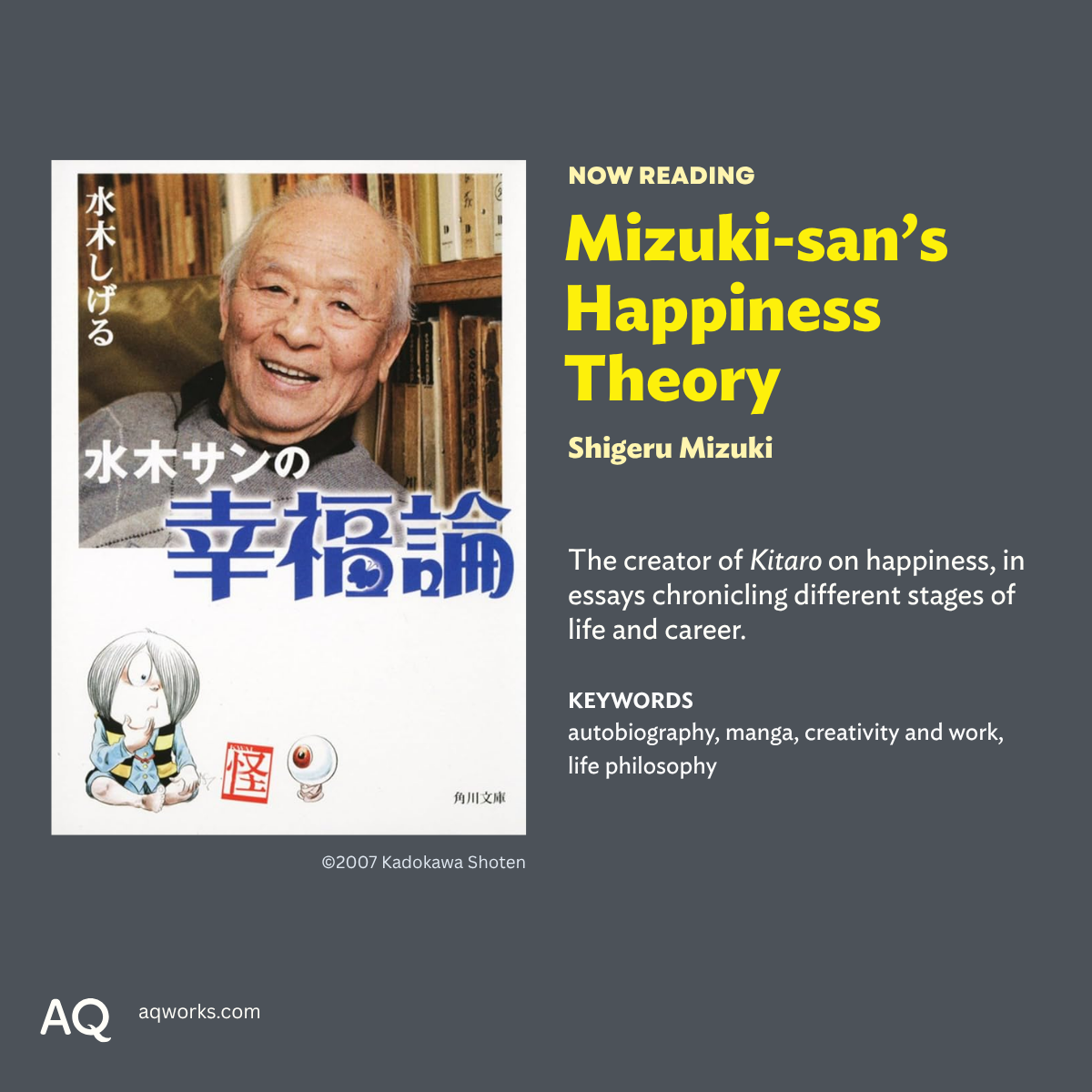
Shigeru Mizuki (1922–2015) is a beloved artist that brought us the worlds of yōkai—supernatural creatures from Japanese folklore–through the visual medium. He is of my grandfathers’ generation, and in this book I got swept away in the vivid accounts of his experience as a conscripted foot soldier in WW2 and decades of struggle as an artist in the turbulence of postwar Japan.
Here are his Seven Principles for Happiness.
- Don’t act with success, glory or winning as your goal
- Keep doing things that you simply can’t stop yourself from doing
- Don’t compare yourself with others. Simply pursue your own enjoyment
- Trust in the power of loving what you love
- Talent and income are separate things. Accept that hard work will betray you
- Become a lazy person. If everything is reduced to efficiency, we humans cannot feel fulfilled
- Believe in worlds invisible to the eye
Not a typo. His point is that it’s a folly to expect hard work to lead to commercial success, considering factors like luck and the era you’re born into.
On days when the world feels loud and the ground so uncertain, voices from a different kind of freefall seem to reach me in a way that closer voices can’t. Mizuki’s life philosophy was forged in instability, an entire world order collapsing and rebuilt, with nothing promised on the other side.
I hope some of these principles reach you, too. And that you tug closer your connection with elders from your own lineage or culture, whose philosophy steadies you.